Events
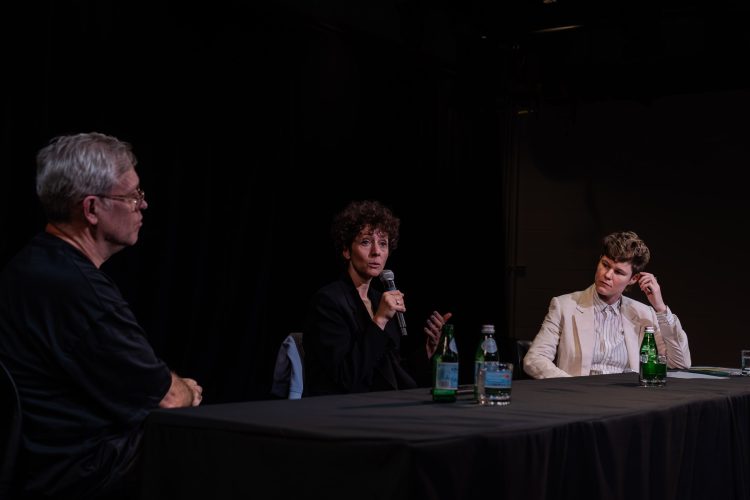
- In late September and early October, Dagmar Jaeger and Emily Goodling hosted Berlin-based author, playwright, essayist, and activist Sasha Salzmann through CAMIT’s Artist-in-Residence program. Salzmann’s works were integrated into a seminar in the Theater Arts department. In collaboration with Theater faculty member Jay Scheib, Emily organized a public conversation with Salzmann that drew around 100 students, lecturers, and community members from MIT’s Global Languages and Theater Arts departments.
- For the fourth consecutive year, Dagmar Jaeger organized the German Studies Fall Film Series, featuring contemporary German-language feature films and a documentary. The screenings complemented students’ study of German, and participants could earn extra credit by submitting written reflections on the films. Dagmar also presented “Integrating Visiting Artists into the German Language Curriculum” at the Global Languages Colloquium in November, sharing insights from the program’s work incorporating artists such as Sasha Salzmann into language teaching.
- Throughout the semester, Emily Goodling continued to organize the German table Stammtisch, providing an informal space for students to speak German, enjoy pizza, and listen to music. These gatherings attracted students from across all German classes at MIT, with an average attendance of 17. Emily also took 10 students to a performance of Franz Schubert’s song cycle Schwanengesang (“Swan Song”), with tickets supported through a CAMIT grant.
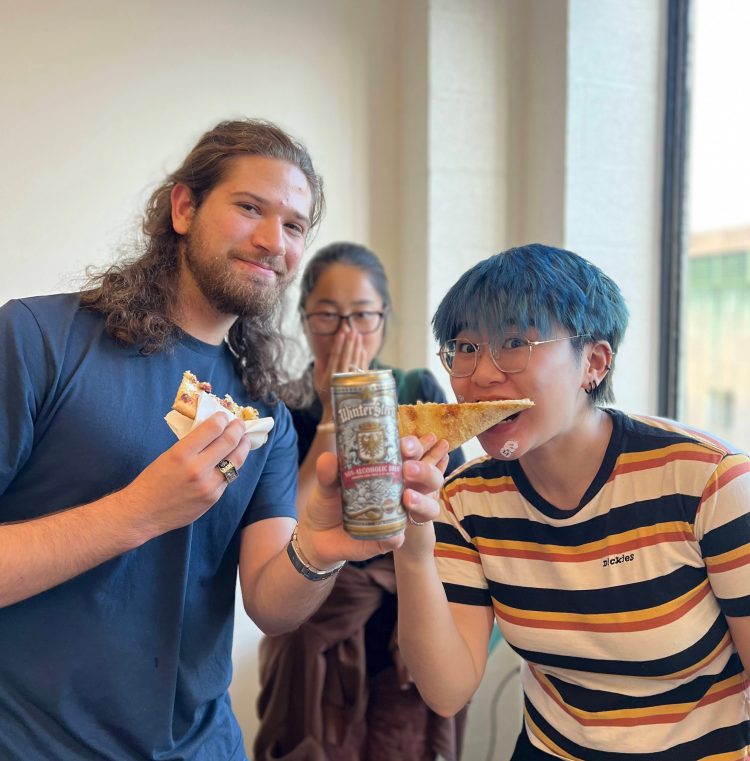
German table Stammtisch
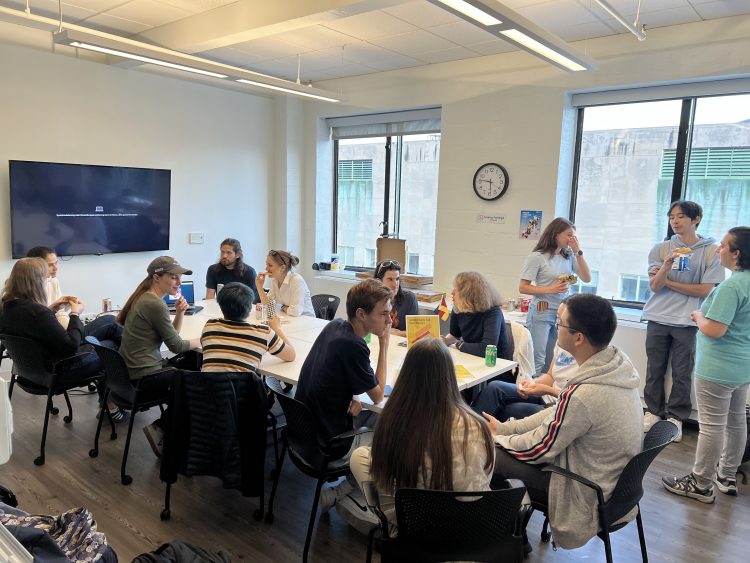
German table Stammtisch
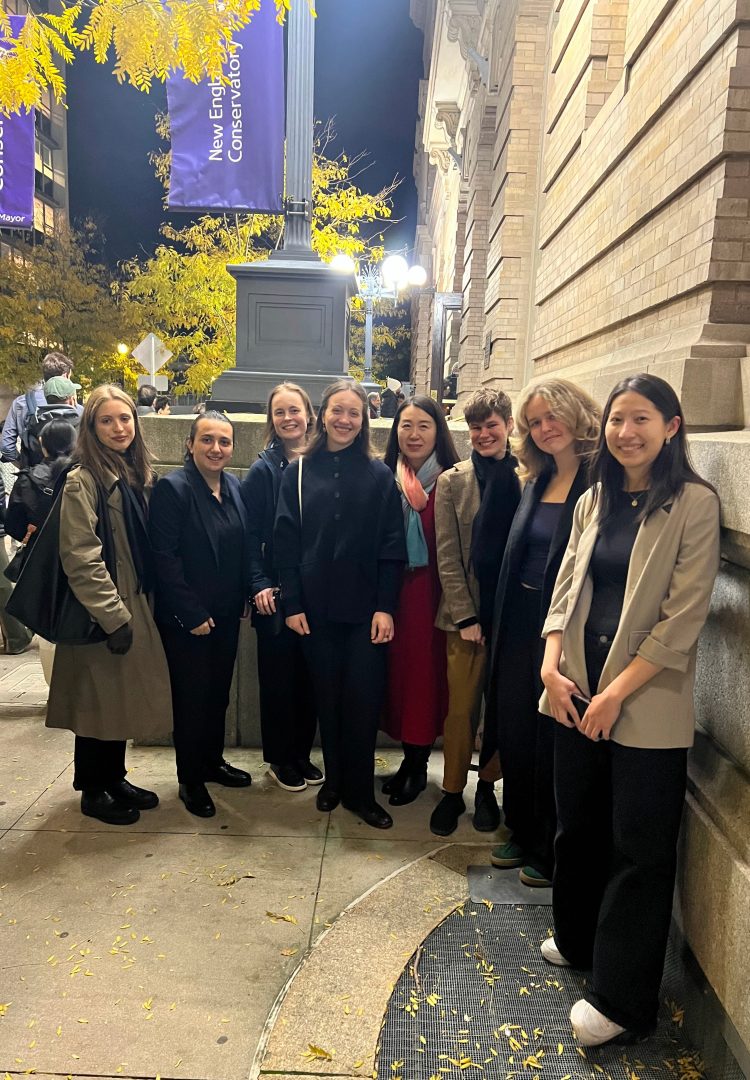
Schwanengesang Concert
- On October 6, Takako Aikawa hosted an event through the Japan@MIT program within MISTI that welcomed the Consul-General of Japan in Boston, Mr. Takahashi. The gathering brought together MIT students enrolled in Japanese language and culture courses, along with Ms. Yoshida, Consul of Cultural Affairs and Public Relations, offering students a valuable opportunity to engage with representatives of the Japanese government.
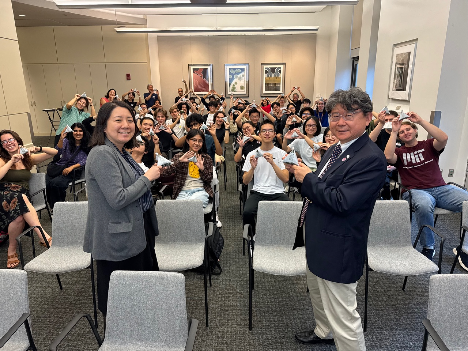
Japan@MIT
- On October 11, the Korean Language Program celebrated the 579th anniversary of Hangul Day, commemorating the creation of the Korean writing system. Organized by Hee-Jeong Jeong, the event featured interactive activities such as a Kahoot quiz and a “Make Your Name in Hangul” beading activity. Students—both current and former—participated in the celebration, deepening their understanding of Korean language and history while strengthening the program’s sense of community.
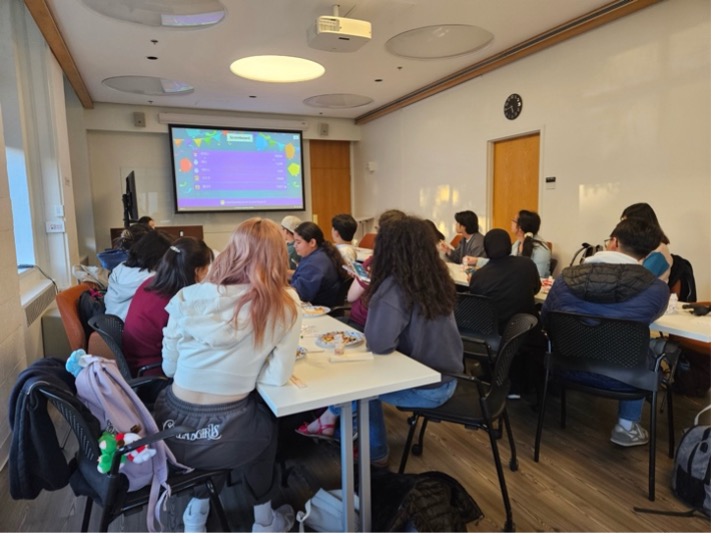
Hangul Day
Hangul Day
- On October 25, Leanna Rezvani took students to the Boston Camerata concert City of Fools: Medieval Songs of Rule and Misrule. The following day, she accompanied students to a performance of Adieu Monsieur Haffmann at the Wimberly Theatre, giving them the opportunity to experience French-language performance and theater beyond the classroom.
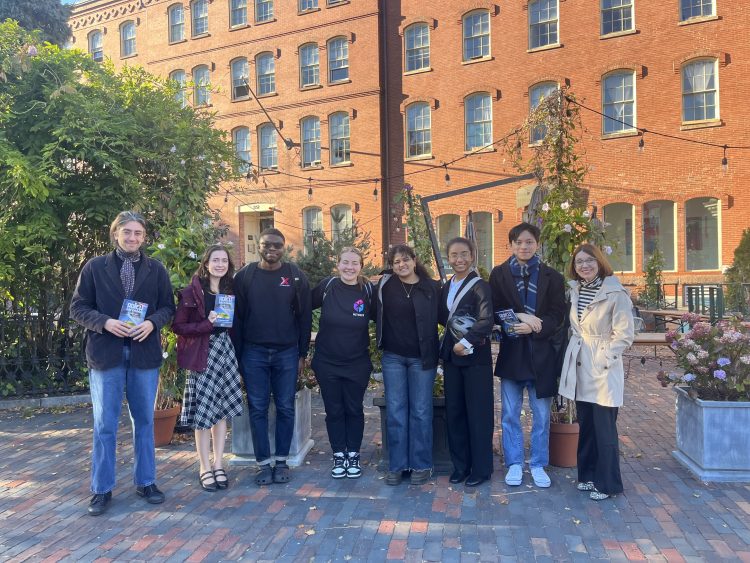
City of Fools: Medieval Songs of Rule and Misrule
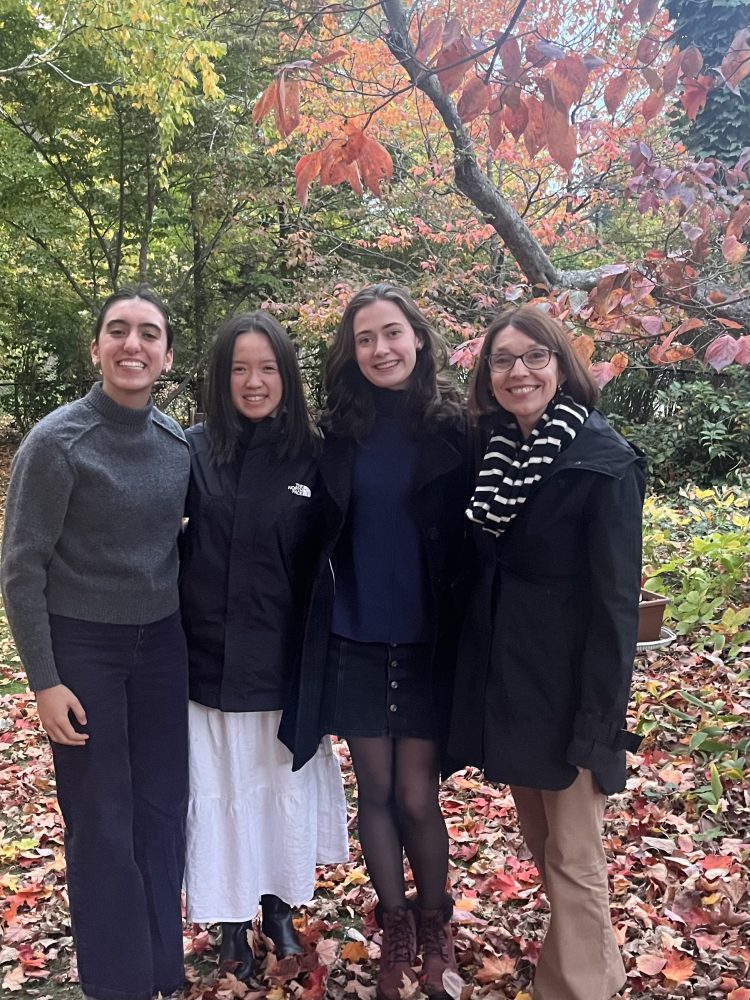
- Nilma Dominique welcomed high school students who won the Alpha Lumen Brazilian Technology Olympiad. The students had developed an app inspired by the UN Sustainable Development Goals and visited MIT to exchange ideas with MIT students. Nilma also organized a virtual visit featuring Brazilian film directors Estevão Ciavatta and Anna Muylaert, who were interviewed by students in the Brazilian Cinema course and later joined an informal conversation with the broader community.
- Organized by David Yagüe González and Javier Barroso, the Spanish program hosted its annual Día de los Muertos altar from October 27 to October 31 in room 14E-304. The installation invited the MIT community to learn about and participate in this joyful tradition of honoring deceased loved ones through memory, food, color, and community. The celebration concluded with a gathering on October 30, where attendees reflected on the cultural significance of the holiday and enjoyed refreshments, including pan de muerto, a traditional Mexican pastry. Community members were also invited to contribute photos or notes to the altar, helping create a shared space of remembrance and cultural exchange.
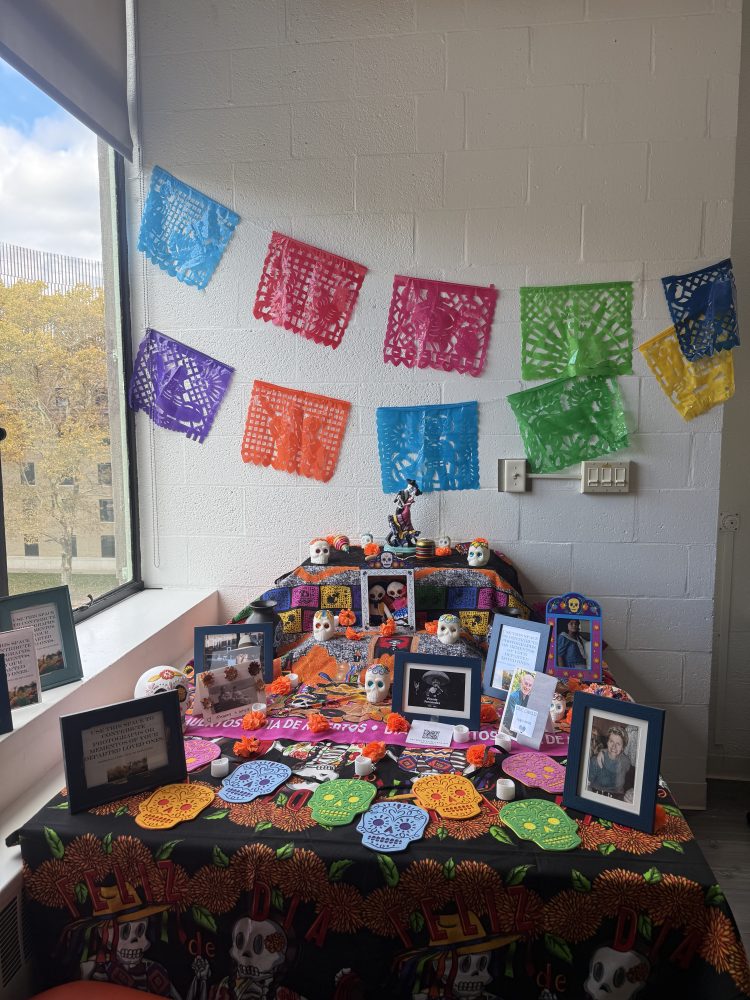
Día de los Muertos altar
- Hee-Jeong Jeong also led several Korean Language Program initiatives throughout the year that fostered cultural engagement and global collaboration. During the spring semester, the program hosted the Korean Language Table, where students gathered for conversation practice, traditional games such as yeonnaligi (kite flying) and yutnori, and Korean snacks in a welcoming community setting.
- Students in Korean V also participated in a Virtual Language Exchange with peers at the Korea Advanced Institute of Science and Technology (KAIST), a collaboration launched in fall 2024. Through joint projects—including designing collaborative T-shirts and co-hosting a radio DJ program—students explored cultural perspectives, strengthened their language skills, and connected as STEM students and global university peers.
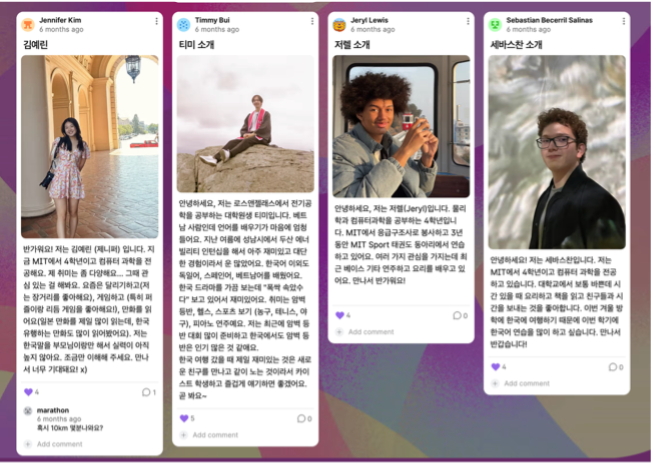
Korea Advanced Institute of Science and Technology (KAIST)
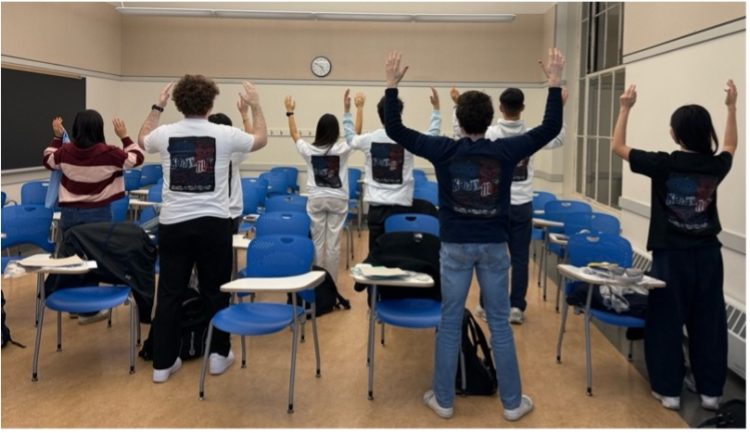
Korea Advanced Institute of Science and Technology (KAIST)
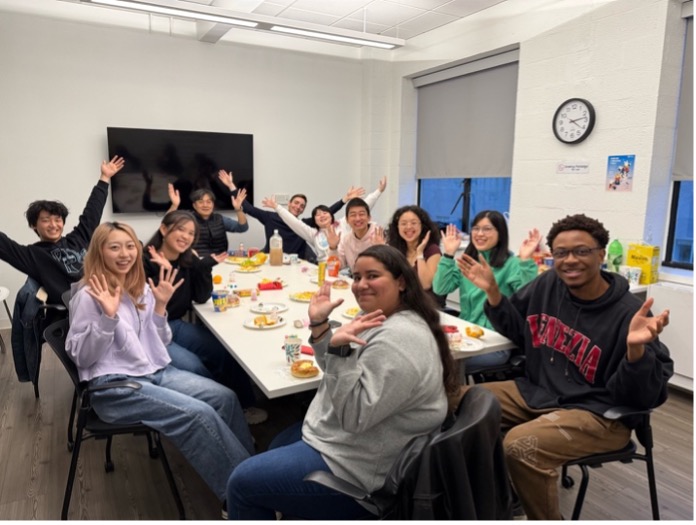
Korean Language Table
- This semester, Masami Lamm and Wakana Maekawa organized two community-building events for students in Hybrid Japanese I and Japanese III: an Origami and Game Hour in October and a Karaoke Hour in November. Each event drew about 20 participants and created a lively, welcoming space for students to interact outside the classroom. Because students in both hybrid levels collaborate on a joint project later in the semester, these gatherings provided an opportunity for them to meet and connect in advance, helping to strengthen communication and make collaboration smoother.
- Building on last year’s activities, Masami and Wakana introduced a more intentional, student-centered approach. After gathering input from students about the cultural activities they were most interested in, the Origami and Japanese games session was organized in a student-led format, encouraging active participation and natural conversation. Through these relaxed cultural events, the program aims to support collaborative learning while fostering a stronger sense of community among students in the hybrid Japanese courses.
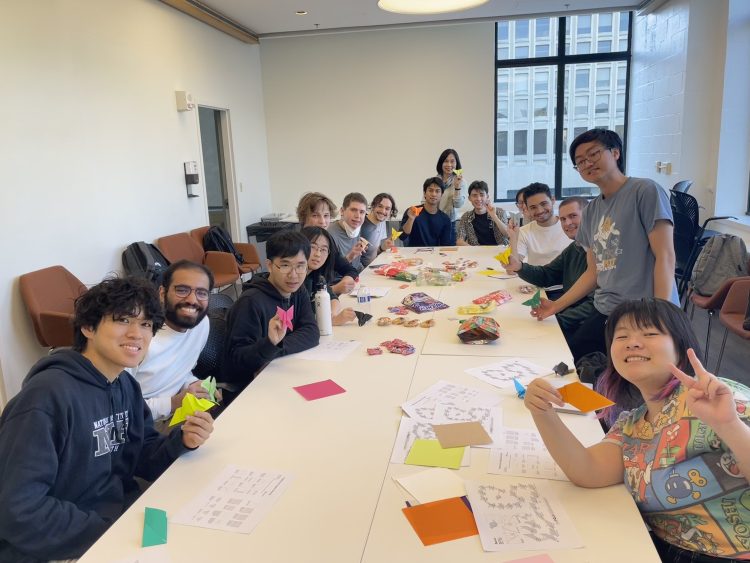
Origami Making
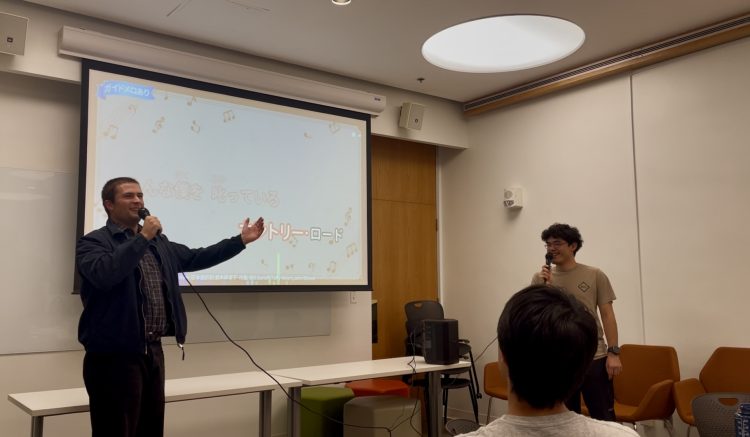
Karaoke Night
- On October 21, the HMH organizing team—Maria Khotimsky, Emily Goodling, Mariana San Martín, Masami Lamm, Nilma Dominique, Min-Min Liang, and Ana Yáñez-Rodríguez—hosted a Heritage-to-Heritage gathering celebrating multilingual and multicultural experiences. The event offered students the opportunity to reflect on navigating multiple languages and cultures, and to connect with peers who share similar experiences, even if their heritage languages differ. The gathering featured music, games with prizes, and international cuisine. Open to MIT students who are heritage language speakers or interested in learning more, the event fostered community and cross-cultural exchange.
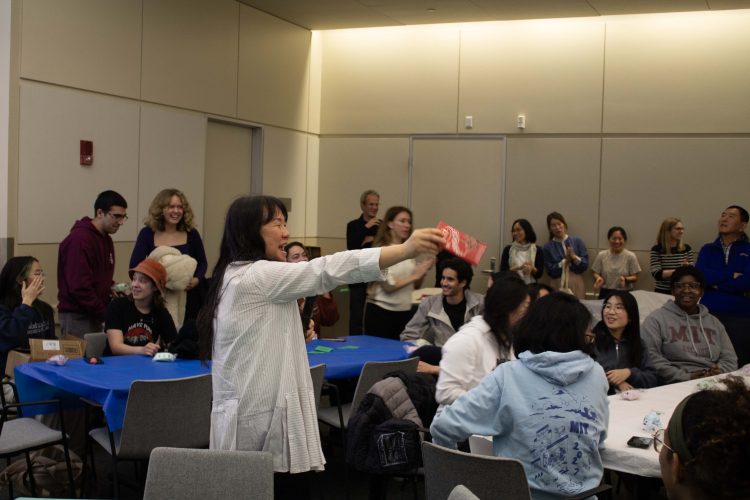
HMH Event
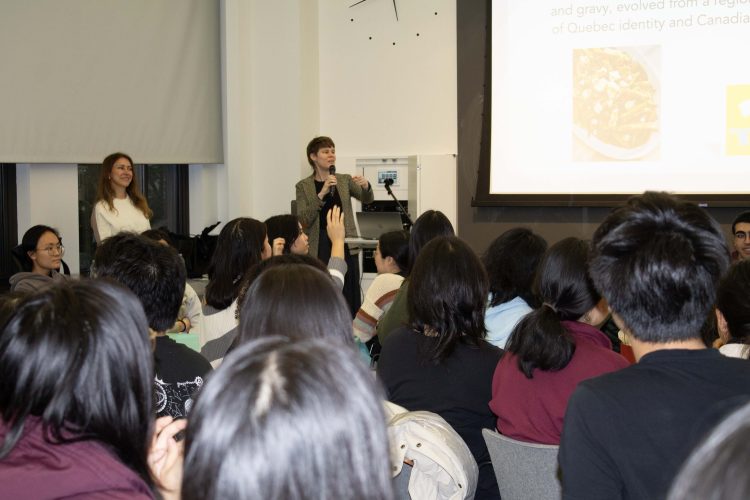
HMH Event
Honors and awards
- Wakana Maekawa received the 2026 Teaching with Digital Technology Award, a student-nominated honor recognizing instructors for their outstanding use of technology to enhance learning at MIT. Since fall 2024, the Japanese Language Program has been developing hybrid courses designed to support diverse learning styles while fostering community among students. Maekawa’s introductory Japanese course incorporates these approaches, and strong student engagement and feedback contributed to her selection for the award.
- Kang Zhou was selected as a recipient of the 2025 Teaching Innovation Award from the New England Chinese Language Teachers Association for the project “From Paragraphs to Independent Research Papers: Scaffolding Advanced Chinese Learners’ Writing and Intercultural Understanding.”
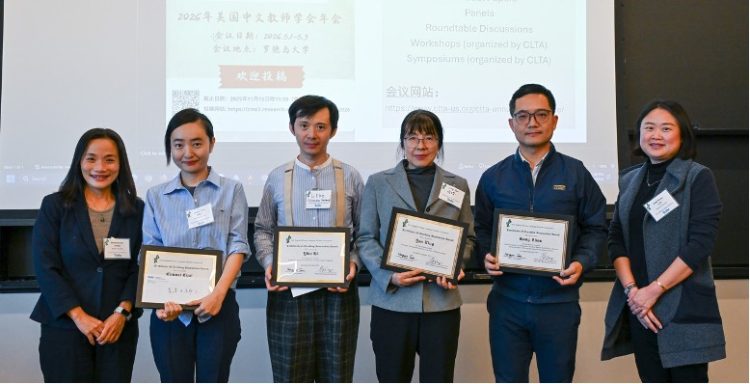
Kang Zhou – 2nd from the right
- Nilma Dominique was honored with the Higher Education Professor of the Year award by the American Organization of Teachers of Portuguese (AOTP), recognizing her contributions to promoting Portuguese language education in the United States. She also participated in the second MITHIC Amazonia Research Planning Workshop, an interdisciplinary initiative aimed at strengthening an Amazonia research community at MIT and fostering collaboration across fields.
- In September 2025, Panpan Gao was elected Chair of the Media and Publicity Committee and a member of the Professional Development Committee of the Chinese Language Teachers Association (CLTA), beginning her term of service with the national professional organization.
- Eva Dessein received a $10,000 Dean’s Grant to support the performance of CLOSE UP!, in collaboration with Dan Safer (Music and Theater Arts).
- Joseph Borkowski was honored with The Robert Henderson Memorial Award by the International Association of Language Learning Technology (IALLT) at the organization’s FLEAT 8 conference in June 2025. The award recognizes talent and accomplishments in the field of language learning technology as well as the promise of future success in administration and organizational contribution.
In and out of the classroom
- Dagmar Jaeger and Emily Goodling incorporated Sasha Salzmann’s work into German courses 21G.403 (German III) and 21G.404 (German IV). Dagmar prepared short, language-appropriate texts and designed class materials tailored to each proficiency level. Students had the opportunity to engage directly with Salzmann’s texts and discuss them in German, gaining unique insights into contemporary literature and artistic practice within a classroom setting.
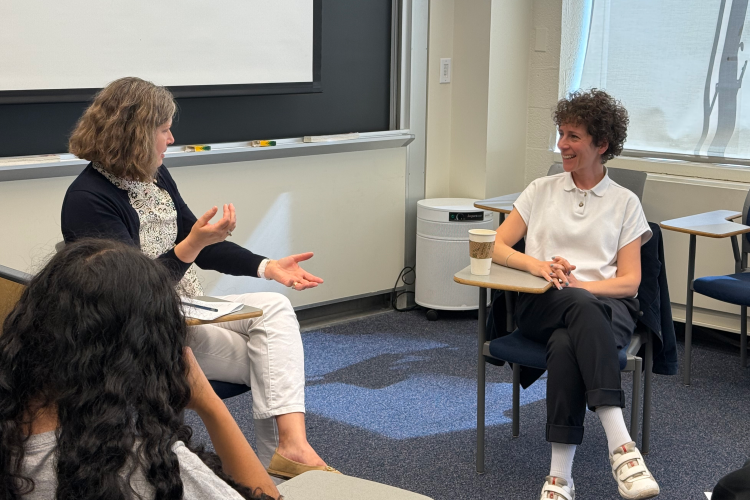
21G.403 (German III) Dagmar with Sasha
- Kang Zhou’s course 21G.111 Chinese Calligraphy has been published on MIT OpenCourseWare as an Open Educational Resource and is now publicly available online. The site provides open access to instructional materials, assignments, and multimedia resources, extending the reach of Chinese calligraphy instruction beyond the classroom and making it accessible to a global audience.
- Min-Min Liang served as a mentor to Michelle Yan (Class of 2027) in the MIT course Play Translation and Cultural Transmission. The course offers undergraduates the opportunity to use foreign languages in an academic setting beyond traditional language classes, integrating themes such as globalization and gender with creative work in theater and translation.
- Hee-Jeong Jeong has continued to serve as an Executive Board Member of AATK and was newly selected as an Executive Board Member of KLEAR (Korean Language Education and Research). She remains actively engaged as an OPI tester/rater and WPT rater, as well as a rater for the U.S. Department of State’s CLS Scholarship Program. This year, she launched Dynamic Korean, the highest-level Korean language course designed for advanced and heritage learners. Her primary project is a collaborative initiative with KAIST (Korea Advanced Institute of Science and Technology) to develop advanced Korean language courses that facilitate meaningful interaction with native speakers through integrated language and cultural exchange.
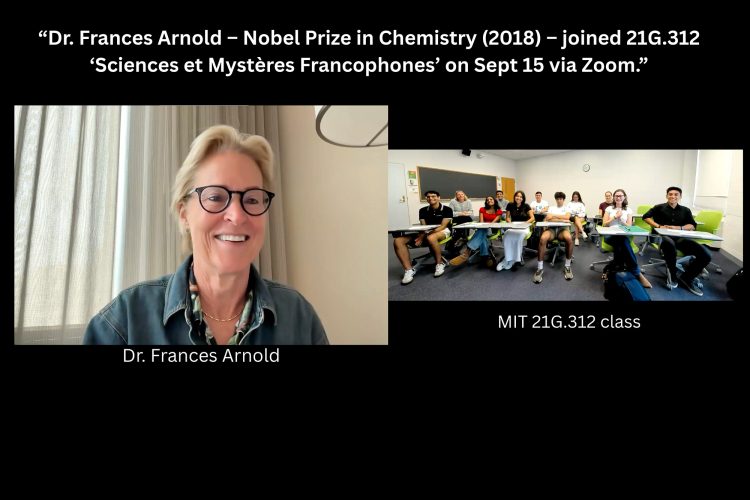
- Isadora Nicolas hosted Nobel laureate Frances Arnold as a guest speaker for her 21G.312 ‘Sciences et Mystères Francophones’ class on September 15. Dr. Arnold spoke with students about her career, students’ scientific interests, and Francophone collaboration in the sciences.
- On November 14, Tong Chen invited a Tibetan student and her brother to speak to students in 21G.105 in a talk titled “Tibetan Script and Culture – A Journey Through My Calligraphy.” They introduced elements of Tibetan Buddhism, ethnic languages and traditions, festivals and rituals, and lifestyles shaped by the high-altitude environment. Students actively engaged with the presentation, asking questions and discussing the cultural topics introduced.
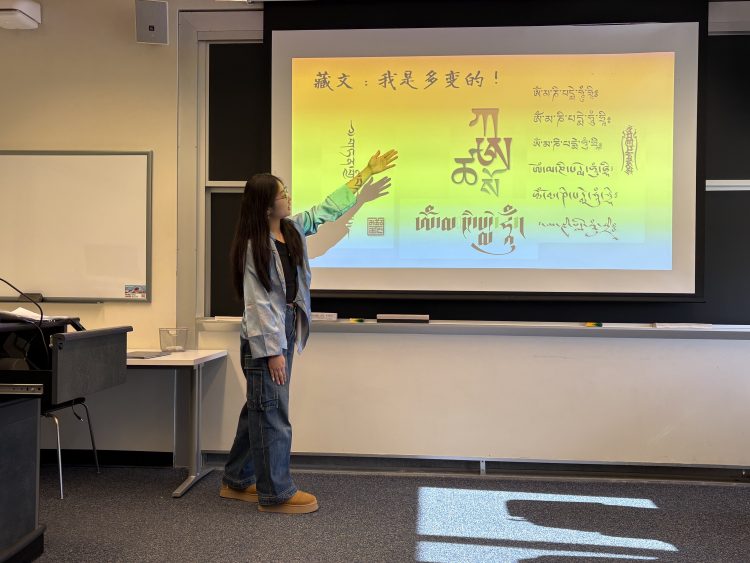
Tibetan Script and Culture – A Journey Through My Calligraphy
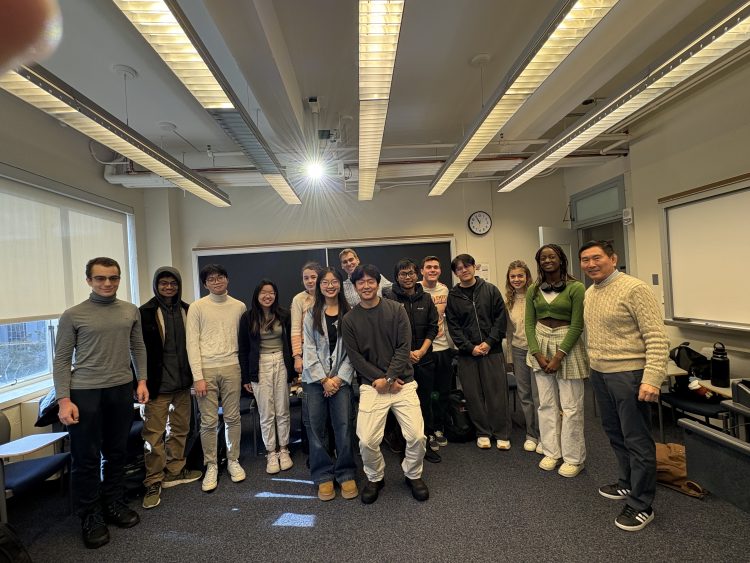
Tibetan Script and Culture – A Journey Through My Calligraphy
- On November 16, Tong Chen organized a Chinese Culinary Culture session for students in 21G.105, which also attracted several former students. The session explored themes such as the Chinese medicinal diet, the concept of harmony between humans and nature, the balance of the five tastes, and the traditions of the eight major Chinese cuisines. The event concluded with a hands-on activity in which students made dumplings and cold noodles together.
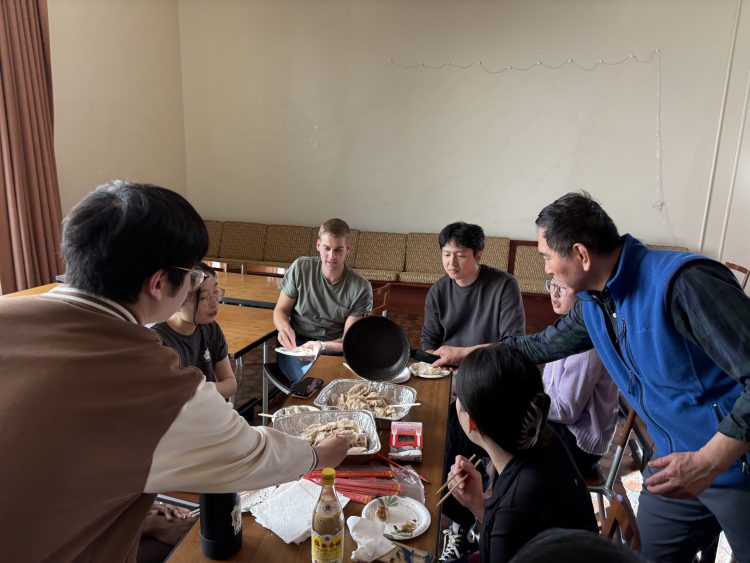
Chinese Culinary Culture session
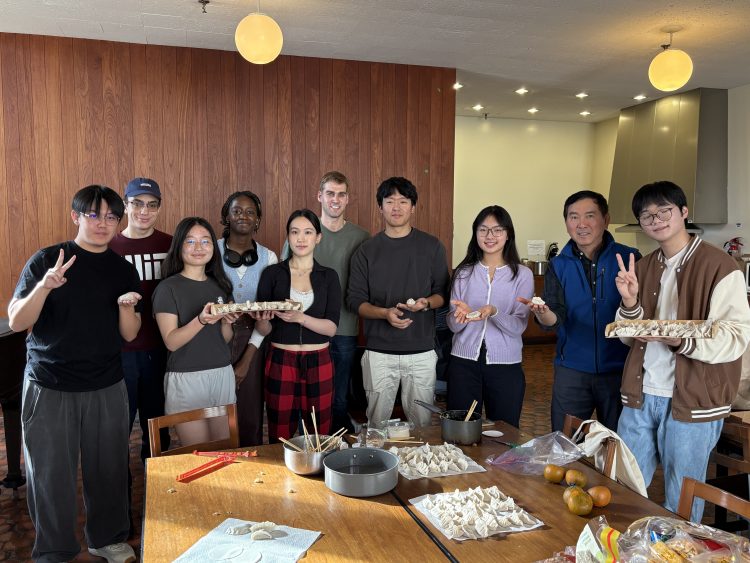
Chinese Culinary Culture session
Publications
- In November 2025, Leanna Rezvani published her monograph Hagiography in Marguerite de Navarre’s Heptaméron: Saints and Debates in Renaissance France (University of Delaware Press, Early Modern Exchange Series), examining religious and cultural debates in Renaissance France.
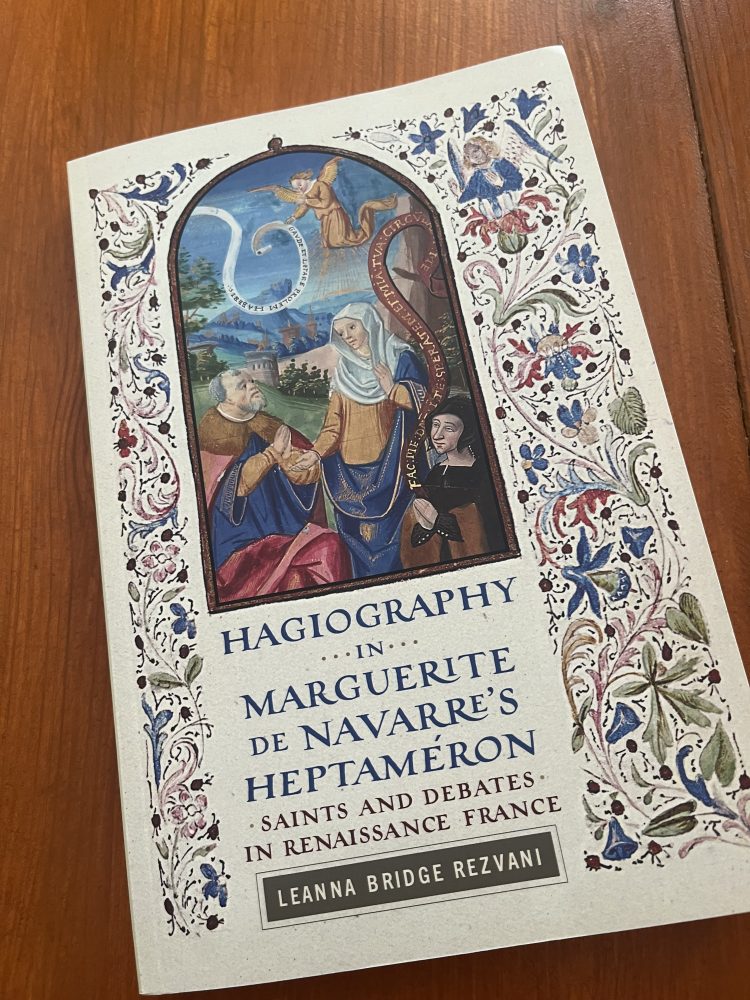
Hagiography in Marguerite de Navarre’s Heptaméron: Saints and Debates in Renaissance France
- Eva Dessein and J. A. Ledford co-authored “Building Communities of Critical Inquiry in the Language Classroom,” Critical Inquiry in Language Studies, 22(4), 316–335, exploring strategies for fostering collaborative and critical engagement in language learning. DOI link
- Per Urlaub and Eva Dessein also published a Spanish translation of their 2024 MIT Press work in Propuesta Educativa, 63(1), 74–87, titled “Innovaciones disruptivas que impulsan la transformación educativa: la alfabetización, la calculadora de bolsillo, Google Translate y ChatGPT,” extending the reach of their research on technology and educational innovation.
Conferences, presentations, meetings
During summer and fall 2025, faculty and lecturers in Global Languages remained actively engaged in national and international scholarly exchange, presenting research and pedagogical innovations at conferences and professional workshops.
- Over the past six months, Per Urlaub has contributed to international conversations on technology, education, and the humanities through a series of invited talks, workshops, and publications. In October 2026, he delivered a keynote address on “Unreife Technologien im Sprachunterricht” for the Sprachenrat Saarland in Saarbrücken, Germany, where he examined the critical role of emerging and imperfect technologies in language education and area studies. At MIT, Per Urlaub was a speaker in November 2025 for SHASS’s lunch workshop series on artificial intelligence in the humanities. His talk, “Future Imperfect: AI in Humanities Education,” explored the challenges and opportunities AI presents for teaching and learning across humanities disciplines and argued that AI can help humanities instructors to . Earlier in August, he participated in the MITHIC Datathon, where he led a workshop reflecting on international comparisons of medical licensing exams, focusing on washback effects, hidden curricula, and the enduring tension between reliability and validity in performance assessment. In addition to these presentations, Per Urlaub’s recent scholarship continues to reach international audiences. In Fall 2025, he and coauthor Eva Dessein published a Spanish-language article in Propuesta Educativa examining disruptive innovations in education extending the impact of their MIT Press contribution from 2024 to wider regional contexts.
- In June, Liana Ewald participated in UNAM’s International Week in Mexico City, a professional training program focused on internationalization, language education, and global academic collaboration. The visit included meetings with faculty and international officers across the university, exploring opportunities such as virtual language exchanges, student mobility initiatives, and potential partnerships with MIT Spanish and Medical Spanish courses.
- Also in June, Tong Chen presented the talk “Difficulties and Approaches in Designing Chinese Language Materials for Learners” at the Third International Conference on the History of Teaching Chinese as a Second Language in Geneva, Switzerland.
- In July, Kang Zhou presented “Bridging Cultures Through Calligraphy: An Innovative Approach to Teaching Ancient Chinese Letters” at the 14th International Symposium on Hanzi Shufa Education, organized by the American Society of Shufa Calligraphy Education (online). That same month, Tong served as one of the organizers of the First International World Languages Education Conference—New Horizons in Innovative Language Teaching—held in Kunming, China, where she also conducted a workshop on “Pedagogical Approaches to Intensive Language Acquisition in Immersion Settings.”
- In August, Maria Khotimsky co-presented the webinar “Spin the Wheel of Learning: Mastering Wordwall for Engaging Classrooms” for the International Association for Language Learning Technology (IALLT), together with Carmen De Lorenzo. The session explored interactive strategies for using digital tools to enhance student engagement and active learning in language classrooms.
- Also in August, Takako Aikawa presented “Effectiveness of AI Correction on Grammar Errors in Japanese Language Learning: Preliminary Results” at the 11th Computer-Assisted Teaching of Language/Japanese (CASTEL/J) International Conference. Presented in collaboration with Tetsuro Takahashi of Kagoshima University, the virtual presentation shared preliminary findings on the role of AI-assisted feedback in addressing grammar errors in Japanese language learning.
- Tong Chen also delivered two presentations in August: “A Study on Typing Error Patterns and Intervention Strategies for Learners of Chinese” at the 2025 Yale International Conference and Workshop on E-Writing Transformation in Chinese Education, and a virtual talk titled “Energizing Beginner Chinese Instruction: Implementing Input-Output Interactive Strategies” for members of the CLTA-SIG groups on L2 Chinese phonetics teaching and research and teaching Chinese as a foreign language.
- In September, Emily Goodling participated in the annual conference of the German Studies Association, where she presented the paper “Futures within/beyond Gretchen in Elfriede Jelinek’s FaustIn and out and Fatma Aydemir’s Doktormutter” as part of the seminar “Alternative Futures: Fictional Representations of Resistance and Change.” Together with Dagmar Jaeger, she also presented at the MIT German Language Colloquium on their integration of works by visiting artist Sasha Salzmann into the German curriculum. Their talk, “Integrating Visiting Artists into German Language Curriculum at MIT,” highlighted innovative approaches to incorporating contemporary artistic voices into language instruction.
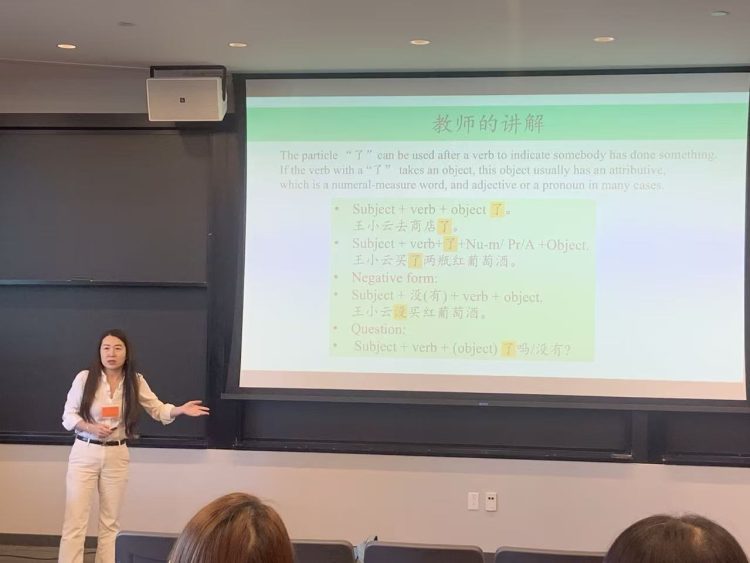
- In October, several lecturers presented at the 14th Annual International Conference on Learning and Teaching Chinese Language and Culture, hosted by the New England Chinese Language Teachers Association (NECLTA) at Tufts University. Min-Min Liang presented “Comparing and Understanding: Project-based Language Learning for Heritage Learners.” Elisa Sure delivered the talk “Exploring the Teaching Methods and Strategies of ‘了1’ and ‘了2’ from the Perspective of Learners,” focusing on learner-centered approaches to teaching Chinese aspect markers. Panpan Gao presented “Applying Topic-Based Instruction Flexibly in Summer Intensive Chinese Programs.” Tong Chen contributed two presentations: “Typing Chinese in the Digital Age: Pedagogical Challenges and Classroom Strategies” and “Building Language Skills and Cultural Connections via Story-Based Reading.” In addition, Tong Chen delivered a virtual lecture titled “Making the Classroom Come Alive: Design and Teaching Strategies for Beginning Chinese Learners” for teachers and students at Nankai University in China.
- Leanna Rezvani presented the paper “Lust and the Liturgical Calendar: A Lascivious Lent & the Heptaméron’s 35th Tale” at the Sixteenth Century Studies Conference in Portland, Oregon, examining the interplay between desire, liturgical time, and narrative structure in early modern literature.
- Kang Zhou presented “Inspiring Language Learning Through Art: Teaching Practices from a Chinese Calligraphy Course” at the Sixth Harvard International Conference on Chinese Pedagogy, hosted by Harvard University.
- In November, Maria Khotimsky organized and moderated the webinar “Approaches to Teaching Media Literacy in a Language Classroom,” hosted by the American Council of Teachers of Russian (ACTR). The event brought together educators to discuss pedagogical frameworks and practical strategies for integrating media literacy into language instruction.
- Also in November, Takako Aikawa presented “Lost in AI Adoption: Enhancing Language Teaching or Replacing Teachers?” at the annual fall conference of the American Association of Teachers of Japanese, held in conjunction with the American Council on the Teaching of Foreign Languages convention in New Orleans. She was also invited to present “Augmenting Language Learning: AI for All Levels” at a professional development workshop hosted by the Center for Languages and Cultures at the University of Southern California.
- At the ACTFL Convention in New Orleans, Tong Chen presented the paper “Linking Perception and Production in L2 Chinese Pronunciation Development.” At the same conference, Masami Ikeda and Wakana Maekawa delivered the presentation “Innovative Collaboration Across Levels: Developing Hybrid Japanese Courses,” examining the implementation of cross-level collaborative activities in hybrid Japanese courses and their impact on student learning and community building.
- In December, Haohsiang Liao delivered the keynote address “Three Years of Study Abroad Programs in Taiwan – Curriculum Design and Pedagogy” at the Third International Conference on Teaching Chinese as a Second Language, hosted by Kainan University. The keynote reflected on curriculum development, pedagogical innovation, and program outcomes in study abroad contexts.
- Also in December, Kang Zhou delivered an invited talk via Zoom for Xi’an International Studies University titled “Crossing Cultures, Navigating AI: Professional Competencies and Contemporary Challenges for International Chinese Language Teachers,” examining the evolving skill sets required of Chinese language educators in an era shaped by artificial intelligence and globalized learning environments.
Worldwide Impact
- Nilma Dominique traveled to Brazil and Spain for a series of academic engagements and research collaborations. In Brazil, she delivered a talk at the Federal University of Pará (UFPA) as part of the Intercultural Dialogues of PLE, discussing the teaching of Portuguese in the United States. She also presented on gestures and communicative competence at the V International Symposium Nós do Norte (Sinós), organized by the Federal University of Western Pará (UFOPA) in collaboration with the University of Warsaw. While in the Amazon region, she visited the Abaré Project, a hospital boat that provides free healthcare to remote riverine and Indigenous communities, and learned about community-based educational initiatives. In December 2025, Nilma Dominique returned to the University of Alcalá in Spain as a Giner de los Ríos Research Stay Fellow, with additional support from the dean’s grant. During her visit, she contributed to an international project on an Ibero-American Gestural Atlas, delivered a public lecture, and led a workshop on non-verbal communication. She also met with colleagues at the Instituto Cervantes in Alcalá de Henares, the birthplace of Miguel de Cervantes.
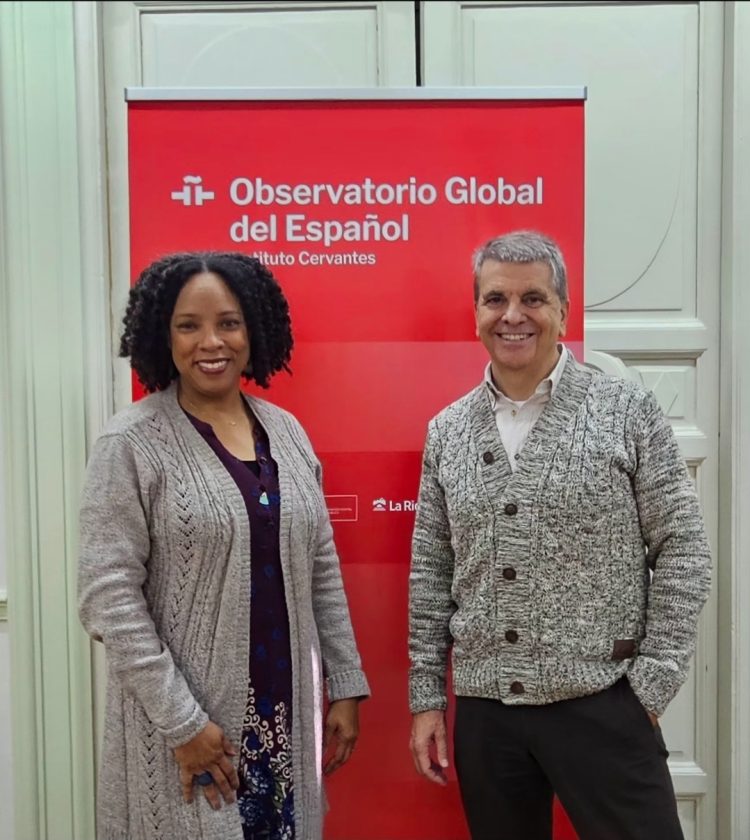
Nilma Dominique is with Francisco Moreno Fernández, Director of the Observatorio Global del Español.

Nilma in Abaré
- Eva Dessein served as a contributor and consultant for an episode of DACODAC, a media education project funded by the Belgian Conseil Supérieur de l’Éducation aux Médias. Promoting ethical digital practices and media literacy, the program has been broadcasting on BX1 since January 2026.
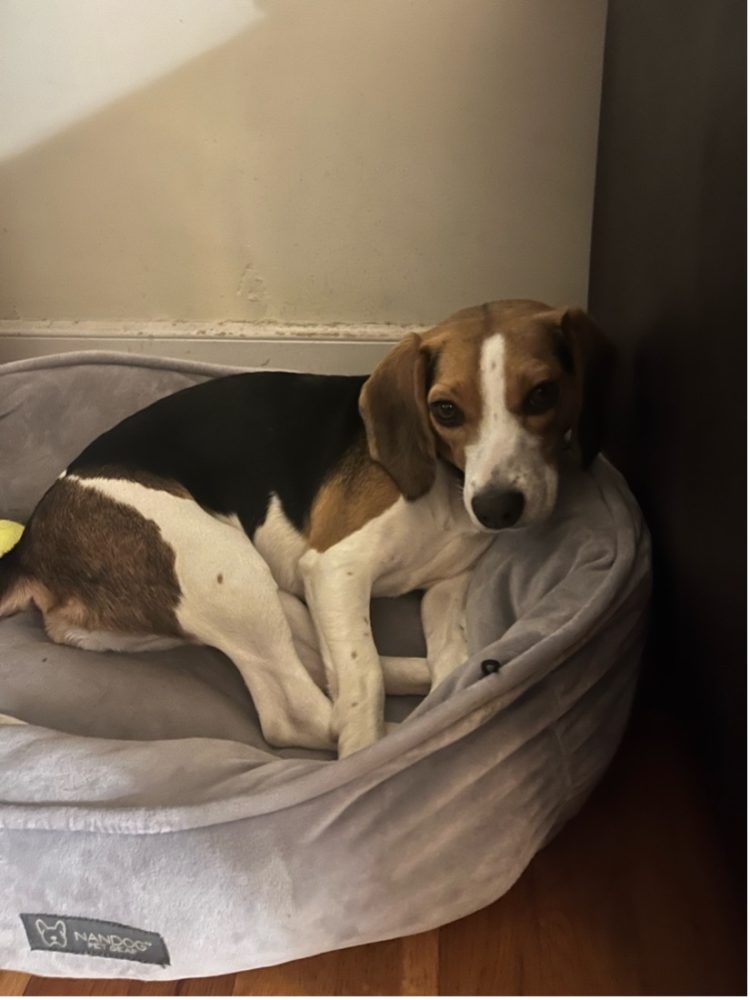
Global Languages Pet Parent Association
Leanna & Cypress
In November, Leanna Rezvani adopted Cypress, a rescue beagle from Tennessee. Her new puppy is playful, affectionate, and full of mischief!
Panpan & Xiao Hei & Xiao Hua
Xiao Hei and Xiao Hua wish everyone a Happy Year of the Horse!