
2026 German Studies Excellence Award
with special guest Rainer Hauswirth, Director of the Goethe Institute, Boston
 On April 28, 2026 the German Studies Group, together with students of German and invited guests, celebrated the students’ accomplishments in German during the academic year. Sponsored by Global Languages, MIT-Germany, and the Consulate General of Germany in Boston, the Writing Prize honors students who exhibit strong language skills and creativity in the study of German language and culture in courses at MIT.
Guests and supporters of the German program at MIT at this year’s Award Ceremony included Rainer Hauswirth, Director of the Goethe Institute Boston, Justin Leahey, Director MIT-Germany, and Abby MacKenzie, Program Coordinator, MIT-Germany.
The 32 entries written in German show a wide range of topics and styles. Entries include a photo essay about a museum trip reflecting on themes of home and belonging, a modern fairy tale (à la Grimm Brothers), and a research paper examining the ways in which biochar can be regarded as a sensible solution to the climate crisis in German-speaking countries. Congratulations to everyone!
Winners of the German Studies Excellence Award 2026
First Prize
Loreta Arzumanyan ‘26 won the First Prize for her essay “Kunstwerk über die Migration, das Kafkaesk und den Dadaismus” written in Emily Goodling’s 21G.411 class.
In her “Kunstwerk über die Migration, das Kafkaesk und den Dadaismus” Loreta Arzumanyan explores themes of alienation, uncertainty, and the search for belonging. The essay is interdisciplinary, combining a collage in the style of Hannah Höch with a literary analysis of Franz Kafka’s works. The essay reflects Loreta’s sustained academic engagement with German Studies by drawing on insights and methods from the many German classes she has taken over her four years as an undergraduate. Her essay highlights parallels between Kafka’s characters and the experience of migrants, especially in relation to exclusion and bureaucratic control. It also shows how Dadaism, with its absurd and contradictory style, effectively captures the complexity of these experiences. In her laudatio, Dagmar Jaeger praised the essay’s insightful integration of literature, art, and personal experience. The laudation also emphasized the text’s analytical and nuanced style, which renders complex ideas engaging, accessible, and personally resonant. Herzlichen Glückwunsch an die Preisträgerin!
Second Prize
Merlin Gogolin ‘27, “Macht in der Maschine: KI durch die Linse Kafkas” (21G.421)
Vaibhavi Addala ‘27, “Spuren” (21G.409)
Kristel Acuña García ‘27, “Der Koffer” (21G.409)
Grace Mao, G “Das Interview mit Dr.B” (21G.404)
Sebastian Arevalo ‘27, “Gedächtnis oder Genie?” (21G.404)
Svetislav Vuletić ‘29,“Mein eigenes modernes Märchen: Hänsel und Gretel” (21G.403)
Agraj Chapagain ‘29, “Mein Studium am MIT” (21G.402)
For a complete list of winners, please visit the German Studies Excellence Award page:
(https://languages.mit.edu/student-awards/german-studies-excellence-award/ 2026-german-studies-excellence-award/)
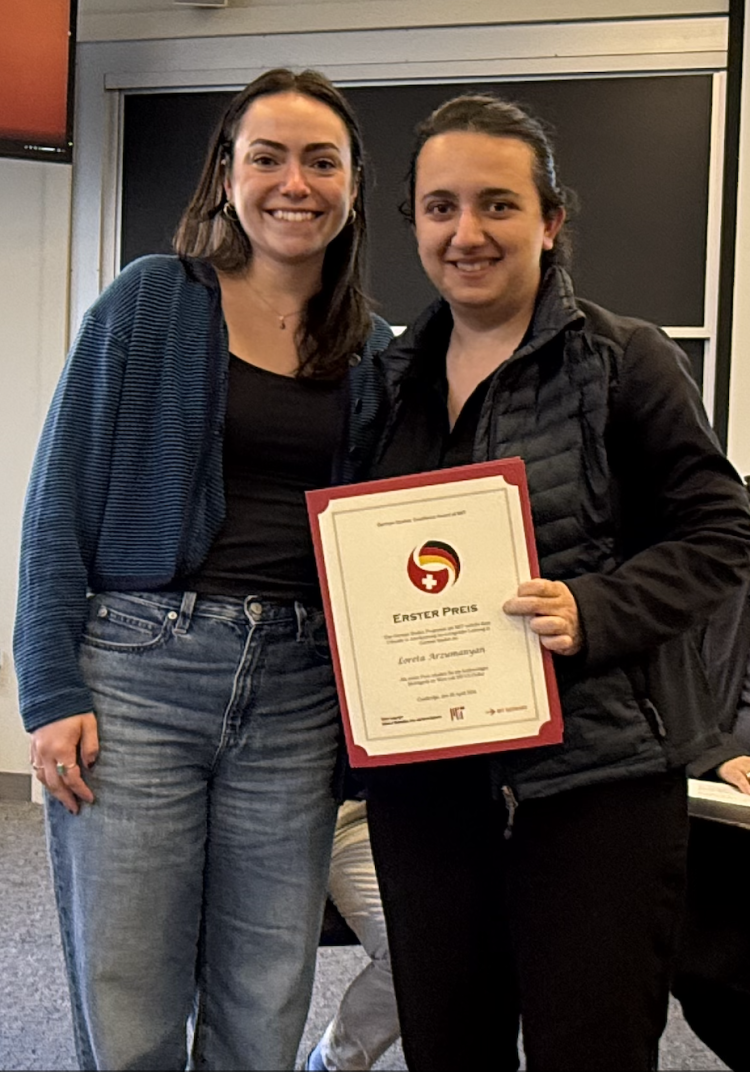
First Prize Winner Loreta Arzumanyan with Abby MacKenzie, MIT-Germany
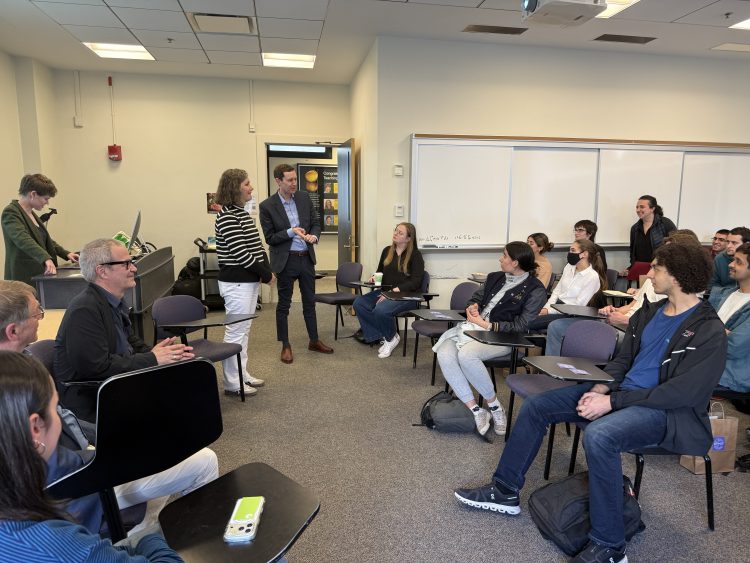
Justin Leahey, Director MIT-Germany, standing, congratulating the winners.
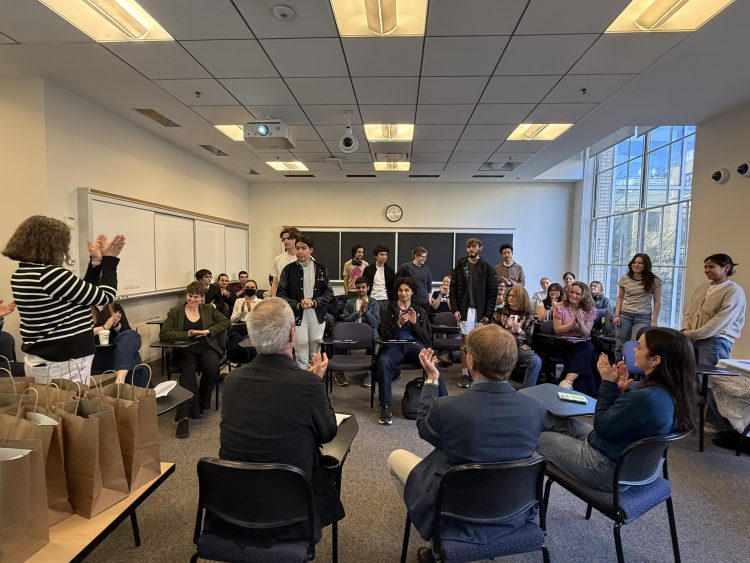
Herzlichen Glückwunsch an alle Gewinner:innen 2026!
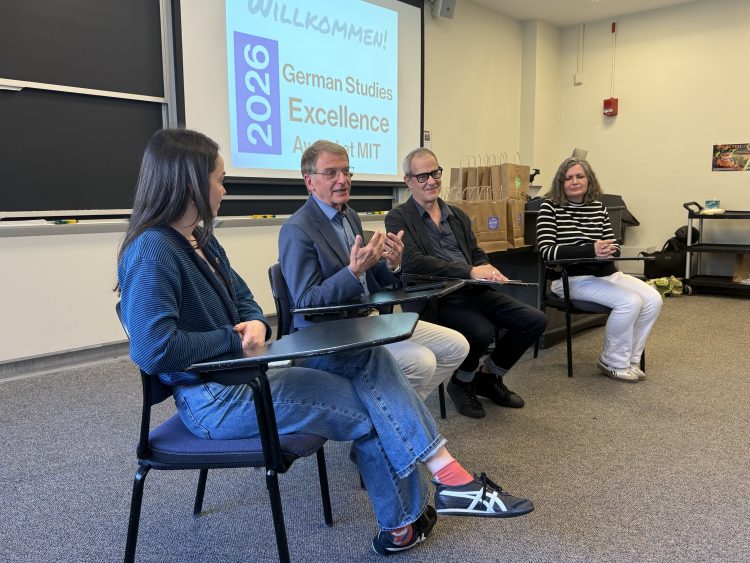
Left to right: Abby MacKenzie, Program Coordinator, MIT-Germany; Rainer Hauswirth, Director, Goethe Institute Boston; Per Urlaub, Director, Global Languages; Dagmar Jaeger, Senior Lecturer, Global Languages